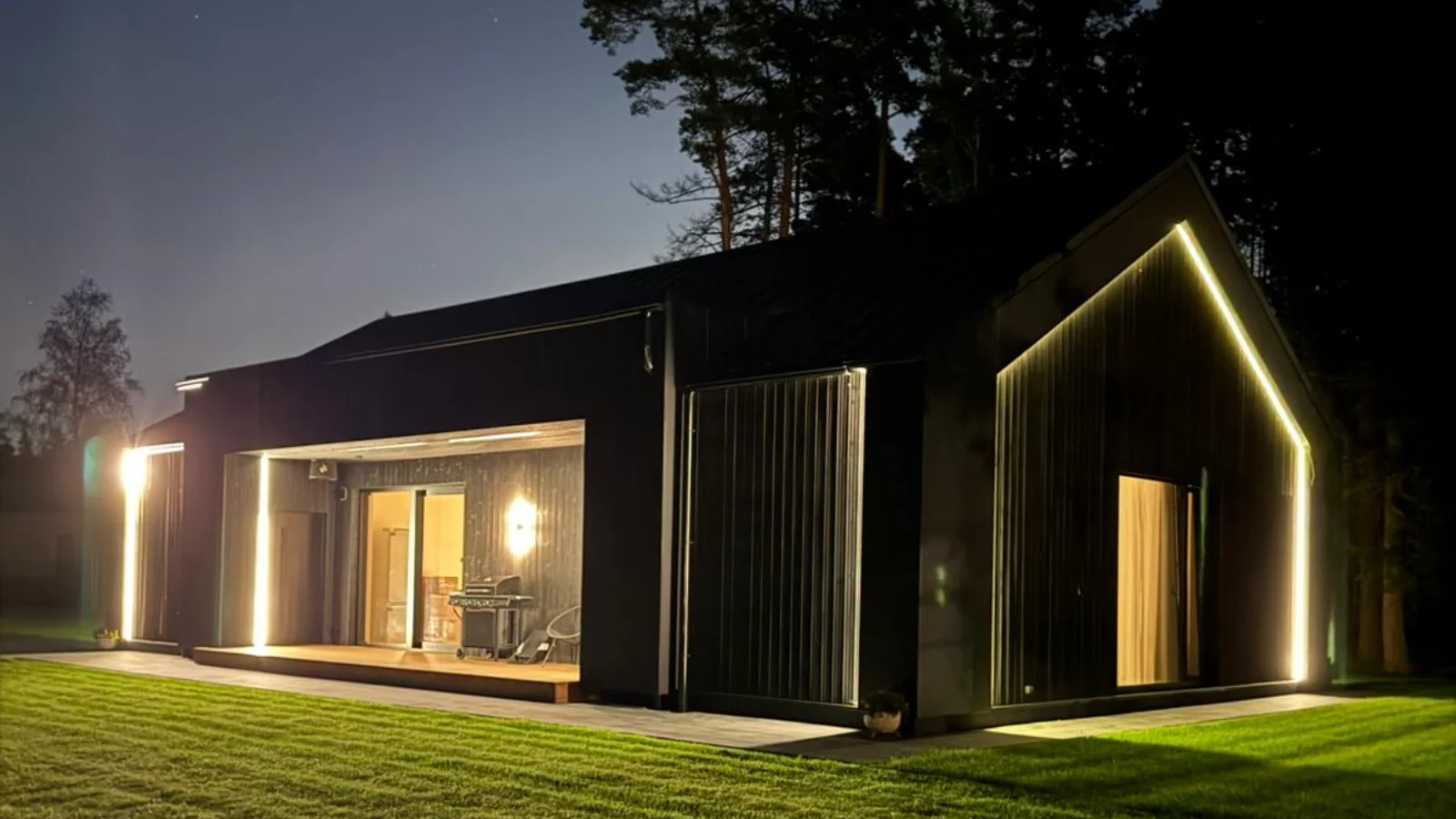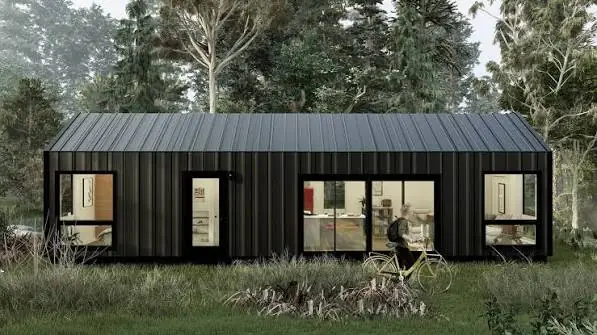
You have found a house in the catalogue. You like the layout, and the price works too. Now it just needs to go on your plot. That is when a question often missing from the beautiful photos comes up: what will the house actually stand on?
Foundations for a modular house depend on its structure, weight and the ground conditions. Screw piles are often offered for compact houses, but concrete supports, strip foundations or an insulated slab may also be suitable. Floor area alone will not tell you which to choose. First, you need information about the plot and a clear idea of the house you want.
Screw piles are convenient, but not universal
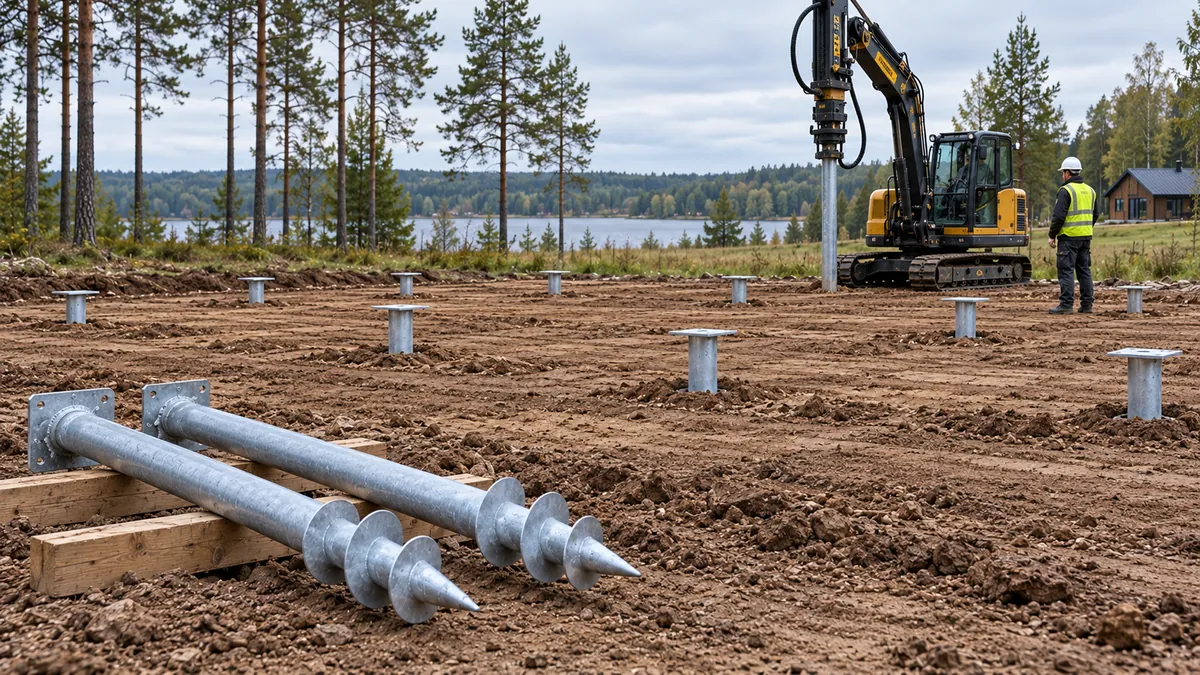
Screw piles are driven into the ground, and the house rests on them at specified points. There is no need to pour a continuous concrete slab, and installation usually involves less excavation. This makes them a common option for finished modules.
Pile length, diameter, corrosion protection and load capacity in the actual soil all matter. Saying a house needs, for example, 16 piles is not enough. There should be a reason for that number and a defined load for each pile. A pile suitable for a terrace will not automatically suit a house. Installation requires appropriate equipment and control of the driving torque. Getting a pile into the ground is only part of the job.
Fill, weak ground, rocks or other difficult conditions call for an adapted design. Sometimes longer piles are needed; sometimes a different foundation system is the answer.
Concrete supports and slabs
Concrete posts or piles can also support a house at individual points. Ground preparation, support depth, position and a consistent level are important. Screw piles are often offered for modular houses, but concrete supports can also be suitable.
An insulated foundation slab, sometimes called a Swedish slab, combines the foundations and the floor base. Our budget guide is around EUR 250-450 per m² including VAT, depending on the ground and scope of work. A finished module already has its own floor structure, so a slab is often unnecessary. It may be chosen for a design with water-based underfloor heating and an air-to-water heat pump. This heating system can also be built into other floor structures: a slab is not a prerequisite.
What do modular house foundations cost?
Public offers help put the cost into perspective. Below are three specific examples, rather than a ranking of identical packages. The amounts and VAT information follow the sources.
| Model | Published foundation price | What the offer specifies |
|---|---|---|
| Ecospace 45 | 1 960 € | 1.6 m screw pile foundations |
| Ecospace DUO 60 | 3 080 € | 1.6 m screw pile foundations |
| Dreamhaus OPTIMUSS 60 | €4,386.98 including VAT | Screw pile foundations for the house, from the 2025 brochure |
Ecospace does not state VAT separately for these extras. The Dreamhaus price comes from its 2025 brochure.
Some manufacturers already include foundations in the house price. ARMA, for example, lists them as part of its turnkey package.
What can make foundations more expensive?
Two houses of the same size can have different foundation costs. On one plot, the planned pile length is enough; on another, the load-bearing soil is deeper. Loads, the number of supports, the slope and access for machinery also affect the price. A small modular house usually needs less foundation work than a large panel house, but difficult ground can increase its costs too.
Can a modular house stand without foundations?
No. A modular house intended for living in needs a foundation system suited to its structure and the ground.
Article sources
Ecospace 45: extras and screw pile foundations
Ecospace DUO 60: extras and screw pile foundations
Dreamhaus OPTIMUSS 60: 2025 price brochure
ARMA: frequently asked questions about specifications
LP Projekti: what determines screw pile quantities and cost
Krinner: screw pile installation and torque control
Construction Law: construction work and placing a prefabricated structure

We compare Latvia's leading modular home manufacturers.