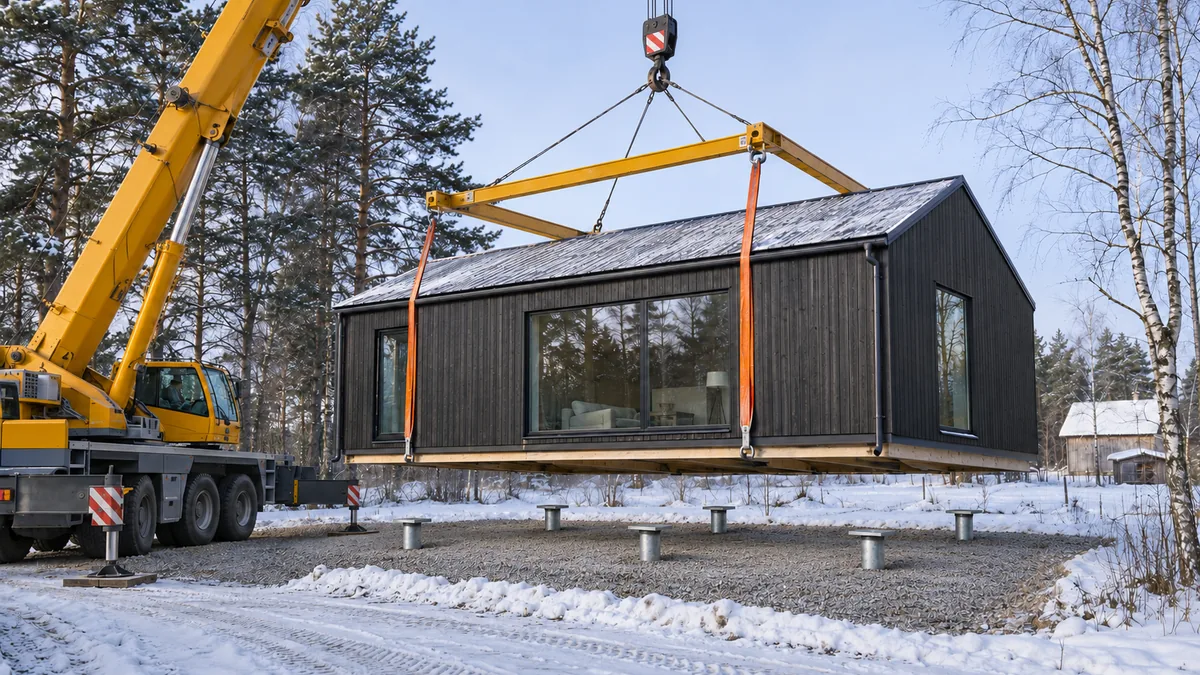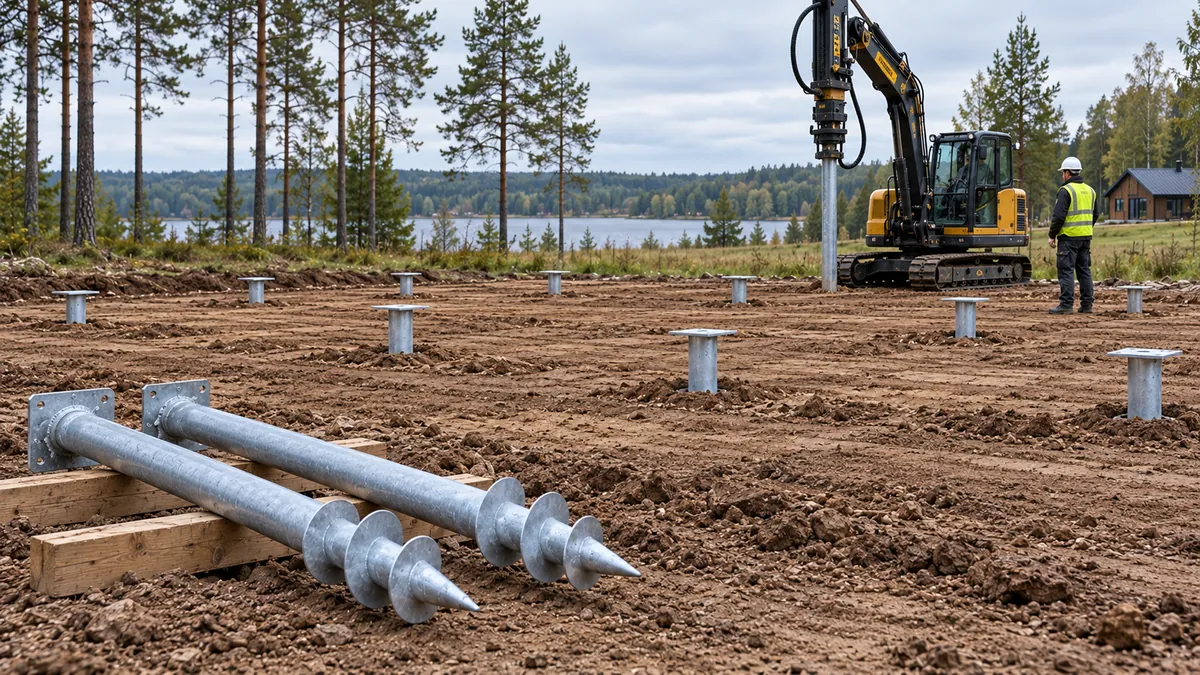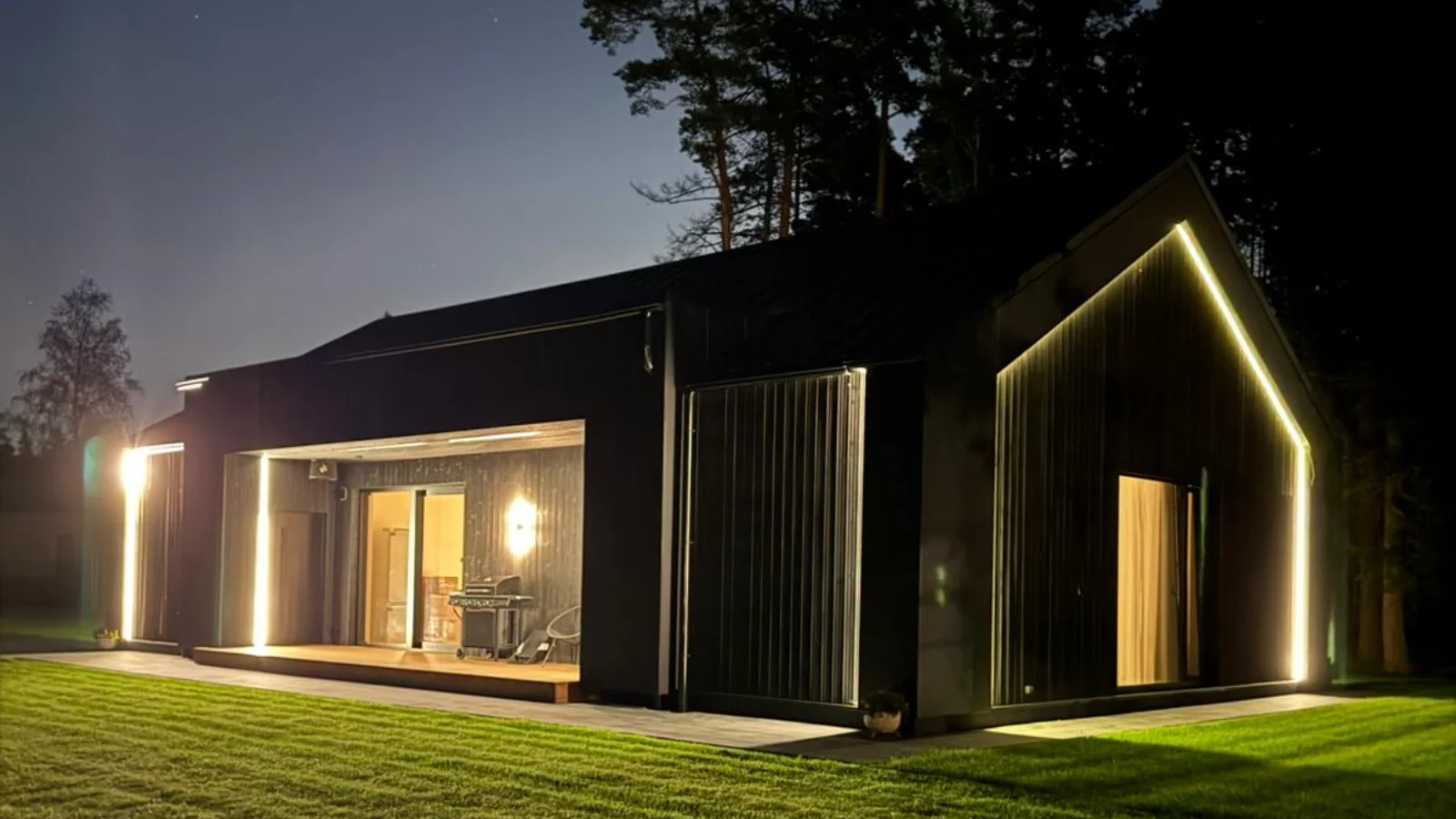
You can buy a timber-frame house as a structural kit, with an unfinished interior, or ready to live in with furniture included. The prices vary considerably. If you can do the interior work yourself or have a reliable tradesperson, arranging the finishing separately may save money. If you want a finished home without organising the work, a fully finished package is the more convenient choice.
What the advertised price actually includes
A frame kit may contain just the timber structure, while another offer may include insulated wall panels. Windows, roof covering, assembly and internal services may be excluded.
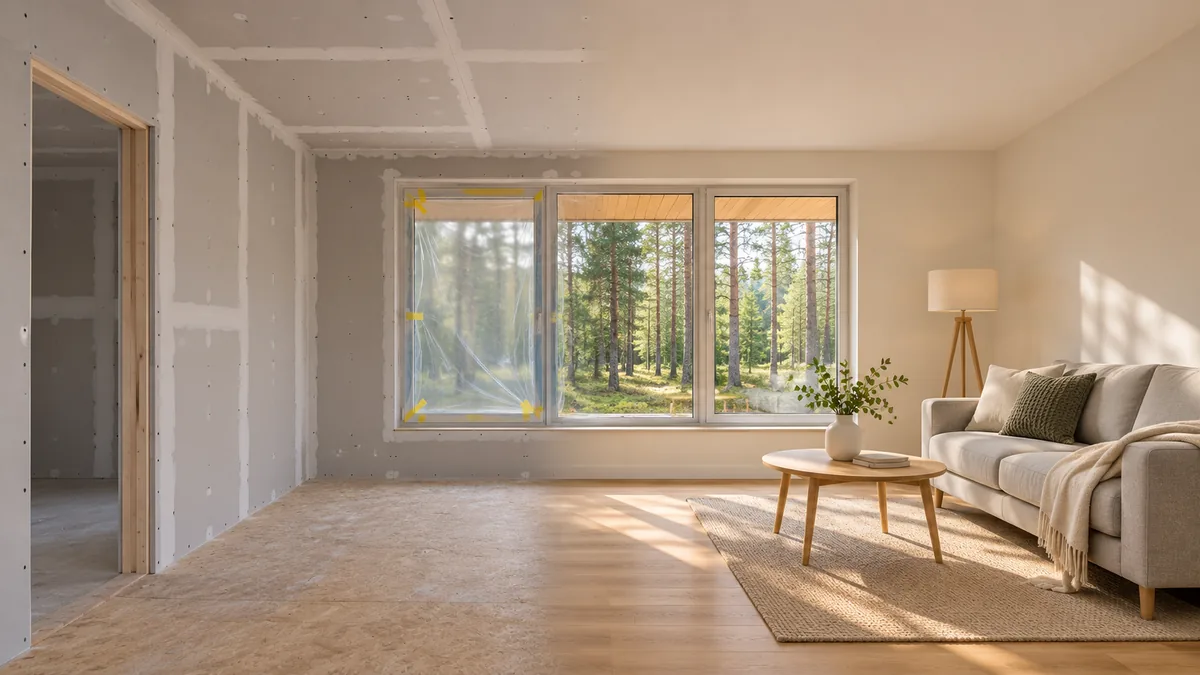
An unfinished package usually means the outside is complete but work remains indoors. It may include an insulated frame, installed service runs and plasterboard, although the scope differs between manufacturers. You still need to fill, sand and paint the walls and complete the other interior work, such as fitting internal doors, laying flooring and tiling.
A fully finished package usually includes finished walls, ceilings and floors, a completed bathroom and internal doors. Heat-recovery ventilation is particularly important in an airtight home: it brings in fresh air while reducing heat loss. Check the offer for sanitary fittings, a fitted kitchen and a heat pump - some manufacturers include them as standard and others do not.
The price difference between unfinished and fully finished
One example is ARMA’s timber-frame Eco modular home, with a 49 m² building footprint. Its regular catalogue price is EUR 47,000 unfinished or EUR 63,900 fully finished, excluding VAT. With 21% VAT, these become EUR 56,870 and EUR 77,319. The difference between the packages is EUR 20,449 including VAT.
That EUR 20,449 is not an automatic saving. It still has to cover all the work and materials missing from the unfinished package. Suppose you spend EUR 14,000 including VAT to finish it. Your total would then be EUR 70,870, saving EUR 6,449 compared with the fully finished package.
When it pays to finish the interior yourself
This option works best if you have practical skills and can fill and paint walls, lay flooring or fit doors yourself. The same applies if you know a reliable tradesperson and can agree on a clear scope and price. You save by doing some of the work yourself or arranging it for less.
A manufacturer’s finishing price covers wages and employment taxes, premises, tools, organising the work and the company’s profit. When you do the work yourself, you do not invoice yourself for your time. Interior finishing is one of the most realistic places to make a substantial saving.
With a timber-frame house, take particular care not to compromise airtightness. If service outlets need moving or membranes need to be penetrated, agree on the details with the manufacturer. Before ordering, also agree how work you do yourself affects the warranty.
When a fully finished package makes more sense
If you do not want to spend evenings and weekends building or finding tradespeople, a fully finished package is the easier option. One team is responsible for organising and carrying out the work, and you can agree on materials, equipment and a completion date before ordering.
This also matters if you are renting elsewhere until you can move in. Cheaper finishing that takes several extra months can mean more rent to pay. Compare the total cost of getting the house ready to live in, including foundations, delivery and connections if the offer excludes them.
Before deciding, ask for two quotes for the same design - unfinished and fully finished. Then send the list of additional work to a tradesperson and request a quote including materials and VAT. That will show how much you could actually save.
Price source
ARMA Eco catalogue prices checked on 17 November 2026. Manufacturer prices may change.
ARMA catalogue prices for unfinished and fully finished homes

We compare Latvia's leading modular home manufacturers.